

No Hot Water? How to Troubleshoot a Water Heater That Isn't Working
Table of Contents
No Hot Water? Here’s What’s Usually Wrong
DIY Water Heater Checks That Are Safe For Homeowners
Tankless Water Heater Not Working?
Other Warning Signs (and What They Mean)
Repair or Replace? How to Decide
When to Call a Pro (and What Counts as an Emergency)
Frequently Asked Questions
Water Heater Repair in Rock Hill, SC
Key Takeaways
A water heater that stops producing hot water may have a tripped breaker, pilot light problem, faulty heating element, thermostat issue, or sediment buildup. Some problems can be identified through simple homeowner checks, while others require professional diagnosis and repair. Understanding the warning signs can help you determine what to check first and when to call a plumber.
When your water heater stops producing hot water, everyday tasks like showering, washing dishes, and doing laundry can quickly become inconvenient. Fortunately, not every water heater problem means you need a replacement. Some issues have simple explanations, while others require a professional repair.
In this guide, we’ll cover common reasons a hot water heater stops working, a few things you can safely check yourself, and how to recognize when it’s time to call a plumber.
At Greymens Plumbing, we are available 24/7 throughout Rock Hill, Fort Mill, Tega Cay, Lake Wylie, Indian Land, and surrounding communities. Give us a call at (803) 524-6126, and we’ll happily help you find the right solution for your specific water heater problem.
Important: If you smell gas, leave the building immediately and contact your gas utility or emergency services from a safe location. For significant water leaks or signs of electrical damage, stop troubleshooting and seek professional assistance. We’ll cover these situations below.
No Hot Water? Here's What's Usually Wrong
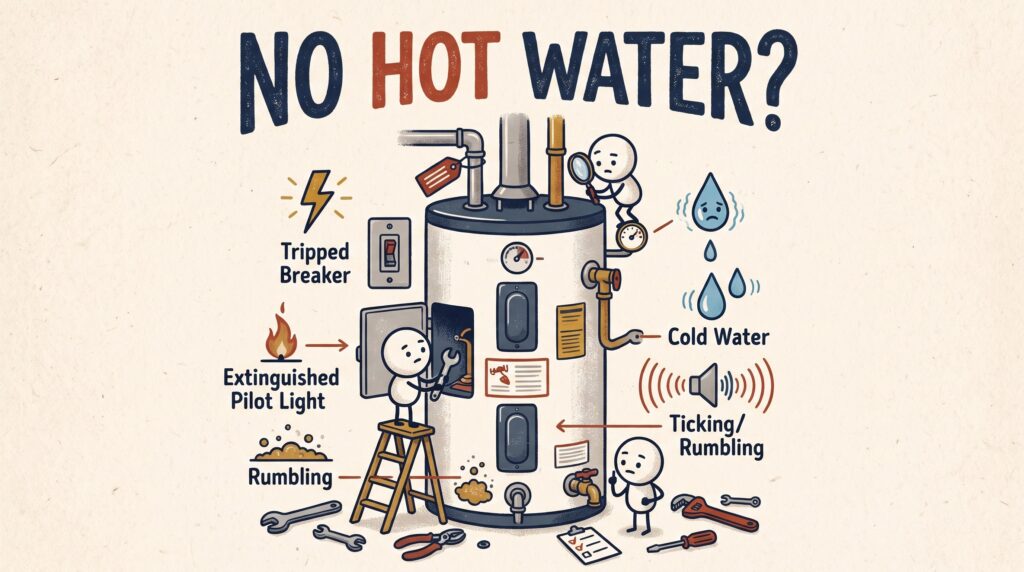
If your hot water heater is not working, the cause often depends on whether you have a gas, electric, or tankless system. Some of the most common problems include:
- Tripped breaker or power loss: An electric water heater cannot heat water if its power supply is interrupted. Repeated power interruptions may indicate an electrical fault that requires professional repair.
- Extinguished pilot light or ignition failure: Gas water heaters may stop heating if the burner fails to ignite. Depending on the model, a faulty thermocouple, gas control, or ignition component may be responsible.
- Failed heating element or thermostat: Electric water heaters rely on these components to heat water and regulate temperature. Both can often be replaced without replacing the entire unit.
- Sediment buildup: Mineral deposits inside a storage tank can reduce heating efficiency and cause rumbling noises. Professional flushing may help, depending on the unit’s condition.
- Insufficient hot water: If your water starts hot but runs out quickly, a damaged dip tube, malfunctioning component, or undersized tank may be responsible.
Start with these homeowner-safe checks to determine whether the problem has a simple solution.
DIY Water Heater Checks That Are Safe For Homeowners
Before scheduling a repair, here are five things you can safely check on your own.
1. Check Whether the Problem Affects the Whole House
Try the hot water at another faucet or shower. If only one fixture is affected, the problem may involve that fixture’s valve or plumbing rather than the water heater. If there’s no hot water anywhere in the house, continue with the checks below.
2. Reset the Circuit Breaker (Electric)
If you have an electric water heater, check your home’s electrical panel for a tripped breaker. If you find one, you can reset it once by switching it fully off and then back on.
Before touching the breaker, make sure there’s no sign of water intrusion or electrical damage, including a burning smell.
If the breaker trips again, stop. Repeated tripping may indicate an electrical fault that requires professional attention.
3. Check or Relight the Pilot Light (Gas)
Some gas water heaters use a standing pilot light to ignite the burner. If yours has one, check whether the pilot is lit.
If it has gone out, follow the manufacturer’s relighting instructions printed on the unit or provided in the owner’s manual. Only attempt this if the manufacturer permits homeowner relighting and you are comfortable following the instructions.
If you smell gas, the pilot repeatedly goes out, or the procedure is unclear, stop and call a professional.
4. Confirm the Thermostat Setting
If the water in your home feels lukewarm, your thermostat may have been turned down.
For most water heaters, 120°F is a common recommended setting for comfort, energy efficiency, and scald prevention. If yours is lower, that might explain why you don’t have hot water. If the setting appears correct but the water still isn’t getting hot, you likely have a different problem with your water heater.
In either scenario, do not remove electrical access panels to adjust internal thermostats.
5. Check the Manual for Reset Instructions (Electric)
Some electric water heaters have a high-limit safety switch that shuts off heating if the water becomes too hot. Consult your owner’s manual to determine whether your model has a reset procedure intended for homeowners.
On many models, accessing the button requires removing an electrical panel, so this is best left to a qualified professional.
If the switch repeatedly trips, the underlying problem needs professional diagnosis.
Tankless Water Heater Not Working?
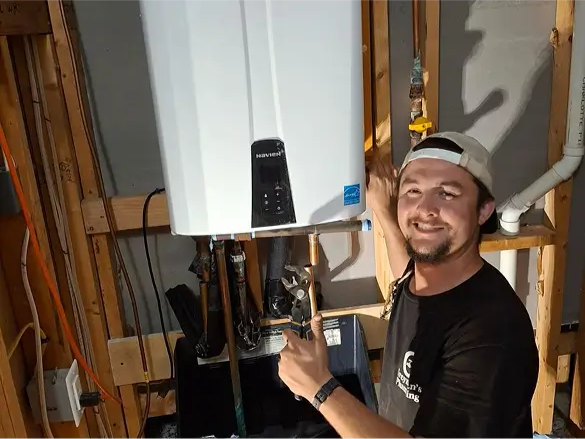
Unlike traditional storage-tank models, a tankless water heater heats water on demand. If your tankless system suddenly stops producing hot water, start by checking its digital display for an error code. The manufacturer’s manual may explain what the code means and identify any homeowner-safe checks.
Common tankless water heater problems include:
- Interrupted electrical or gas supply
- Insufficient water flow to activate heating
- A clogged inlet filter
- Mineral buildup that requires descaling
- Ignition or sensor problems
Do not open the unit or attempt internal repairs yourself. If the error persists after checking the manufacturer’s instructions, give us a call.
Other Warning Signs (and What They Mean)
Your water heater may show signs of trouble before it stops working altogether:
- Rusty, brown, or smelly hot water: Discoloration can indicate corrosion or sediment, while an unpleasant odor may be related to bacteria or the tank’s anode rod. The anode rod helps protect the tank from corrosion, but that protection diminishes as the rod deteriorates.
- Water heater making noise: Rumbling or popping may indicate sediment buildup, while banging, hissing, or other unusual sounds can have different causes. Persistent or worsening noises should be evaluated by a plumber.
- Water leaking from the tank: Leaks can form at a connection or valve, or in the tank itself. If water leaks from your water heater tank body, replacement is often necessary.
Repair or Replace? How to Decide
Whether your water heater needs repair or replacement depends on its age, condition, and the component that has failed. A faulty thermostat, heating element, or other replaceable part may be worth repairing, particularly if the unit is otherwise in good condition.
Traditional tank water heaters often last around 8 to 12 years. If yours is approaching that age, has required repeated repairs, or has developed a leak in the tank itself, replacement may be the better long-term investment.
If you’re considering an upgrade, a tankless water heater may also be worth exploring.
When Janice Louttit contacted Greymens Plumbing about a leaking water heater in April 2026, our team assessed the situation and helped her select a replacement suited to her household’s needs. After the installation, she shared her experience in an online review:
“What a joy and pleasure to work with GREYMEN’S PLUMBING! … Jack did some great research to find the right product to satisfy our needs and we decided on a specific gas water heater. It was scheduled and installed in a few days, working around our schedule. … They demonstrated skill and knowledge, kindness and good humor answering our questions and going the extra mile.” [excerpt]
Janice’s feedback is one of more than 300 five-star Google reviews Greymens Plumbing has received.
When to Call a Pro (and What Counts as an Emergency)
If your water heater still isn’t producing hot water after the basic checks, connect with us. Many water heater problems can be addressed through a scheduled repair. However, a suspected gas leak, significant water leak, or signs of electrical damage require more immediate attention.
If You Smell Gas
A strong natural gas smell may indicate a gas leak. Leave the home immediately, bringing other occupants and pets with you.
As you leave, avoid using light switches, electrical devices, garage door openers, or anything else that could create a spark. Do not start a vehicle in an attached garage.
Once you’re safely outside, call 911, your local fire department, or your gas utility company. Do not reenter the building until authorities confirm it’s safe.
If Your Water Heater Is Leaking
A leaking water heater can cause property damage and may create an electrical hazard if water reaches energized components.
If it’s safe to do so, shut off the water supply to the heater and turn off its power or fuel supply according to the manufacturer’s instructions. Do not touch electrical equipment that is wet or surrounded by water.
Contact a plumbing professional promptly. A leaking connection may be repairable, but a leak from the tank body typically requires replacement.
If You Notice Electrical Damage
Burning smells, scorched wiring, repeated breaker trips, or other signs of electrical damage require professional attention.
Do not open electrical compartments or attempt to reset the system repeatedly. If you can safely disconnect power at the breaker, do so and then give us a call.
Frequently Asked Questions
How do you reset your hot water heater?
Resetting a water heater will work differently depending on the type and model of water heater you own. For an electric-powered unit, you may be able to reset a tripped breaker. Some models have a high-limit safety switch. Gas models may have a pilot that can be re-lit.
If the pilot light repeatedly goes out or the circuit breaker trips again after resetting, stop troubleshooting and contact a professional to identify the underlying problem.
How long does it take for hot water to come back after resetting a water heater?
Most traditional tank water heaters need approximately 30 to 90 minutes to reheat, depending on the tank size, fuel type, and starting water temperature. Electric models may take longer than gas models. If your water still isn’t heating after a reasonable recovery period, the problem may require professional attention.
What are the signs of a failing water heater?
Common warning signs include water not getting hot, running out of hot water quickly after normal use, rusty or discolored water, persistent rumbling, and visible leaks. An older water heater that develops recurring problems may be approaching the end of its useful life.
Water Heater Repair in Rock Hill, SC
If your water heater isn’t working, Greymens Plumbing can help identify the problem and explain your repair or replacement options.
We provide water heater services throughout York County, Indian Land, and surrounding communities. Our team offers 24/7 plumbing service to help you address unexpected problems and restore your hot water.
Call us at (803) 524-6126 to schedule service.